
Currency risk in portfolios
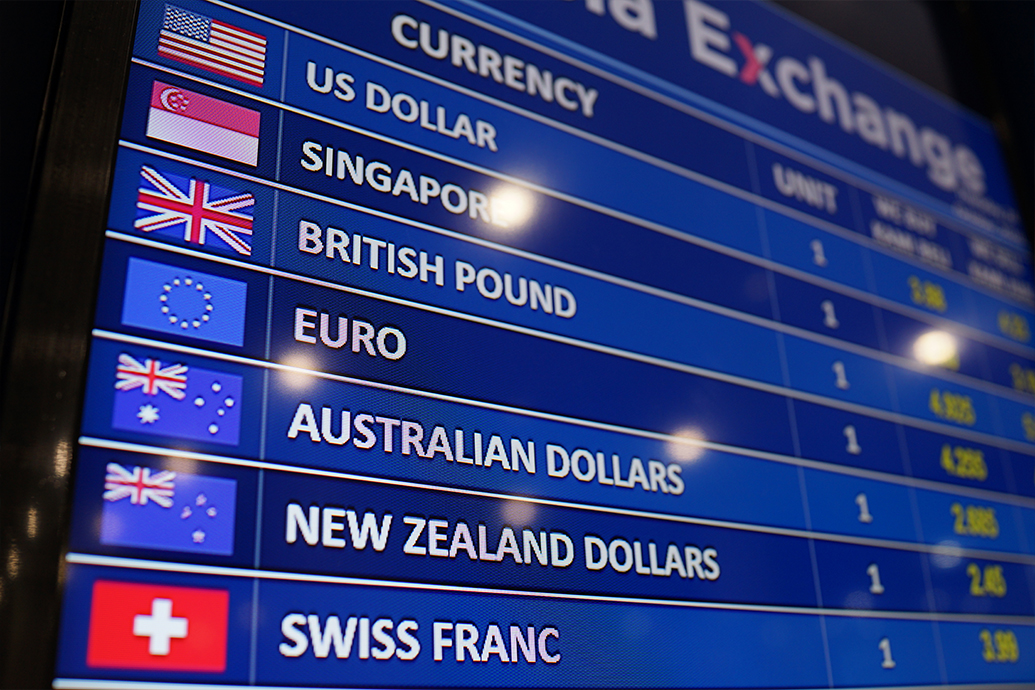
Currency movements can affect investing outcomes. Investors owning overseas assets therefore are naturally concerned about what to do with this risk. Investing overseas means your returns can be affected by two things: how the investment itself performs and what happens to the exchange rate.
For example, if a UK investor holds an overseas investment, movements in sterling against the currency in which that investment is held can increase or reduce the return they ultimately receive.
One way investment managers can seek to reduce this effect is through currency hedging. But whether hedging is appropriate can depend on the type of investment and the role it is intended to play within a wider portfolio.The decision of what to do with currency exposure differs based on the role of the asset class in the portfolio.
Currency markets are notoriously difficult to profit from consistently. In fact, most strategies are beaten by those simply following a random walk[2]. Websites allowing individuals to trade things such as currency pairs often include a clear warning to state that most traders lose money[3].
Therefore, accepting that one cannot predict the direction of currency movements, the only reason one might choose to accept or transfer currency risk to another is if it is expected to materially affect the ability for an investment to perform its role (such as limiting the defensive assets to be defensive in nature). This is explored in more detail below.
Component parts of an investment portfolio
Investment portfolios can contain different types of assets with different roles. Broadly speaking, some may be held with long-term growth in mind, while others may be intended to provide greater stability. The former is designed to be the core return engine, and the latter to dampen volatility and provide protection during times of economic turmoil.
Defensive Assets
The importance of protecting from currency exposure in defensive assets
For defensive assets such as high-quality bonds, currency risk is significantly greater than the risk of the underlying asset itself, for assets intended to provide stability, currency movements can introduce additional volatility. This is achieved through a technique called ‘currency hedging’ within the underlying funds, which essentially ensures that any currency movements are removed from the returns achieved. The graphic below demonstrates the material reduction in risk through the process of hedging currency exposure of overseas bonds.
1 Source: Koyfin as at 12/06/2025. All rights reserved.
2 E.g. Moosa, I. (2013). Why is it so difficult to outperform the random walk in exchange rate forecasting? Applied Economics, 45(23), 3340–3346. https://doi.org/10.1080/00036846.2012.709605
3 See ig.com, trading212.com, and etoro.com as examples
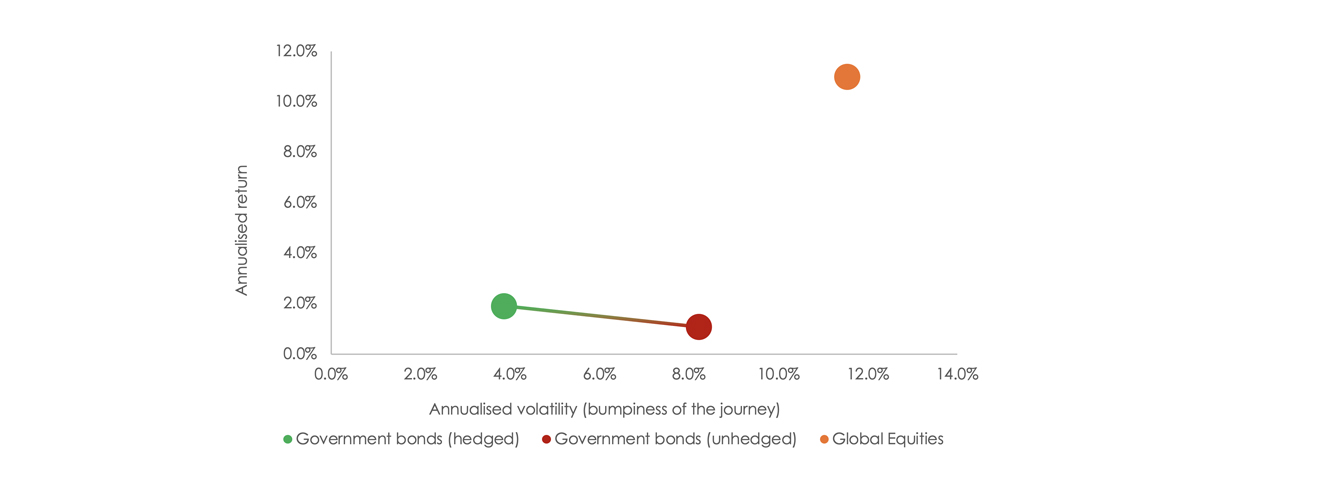
Data source: Payden Global Government Bond Index, iShares Global Government Bond ETF, Vanguard Global Stock Index. Period: 01/04/2011 – 31/05/2025. Returns stated in GBP.
For assets intended to provide stability, currency movements can introduce additional volatility. Currency hedging is one way investment managers can seek to reduce that effect.
Growth Assets
Deciding what to do with currency exposure is less obvious for growth assets
In the context of growth assets, typically comprising stocks, the decision to hedge currency risk is more nuanced. Unlike with defensive assets, hedging currency within the growth assets does not consistently reduce overall risk. Hedging simply reverses the pattern of the impact of currency movements.
Historical correlations between currency movements and global stock markets have been inconsistent across markets, making outcomes unpredictable, and the volatility of currency markets and stock markets typically similar over time.
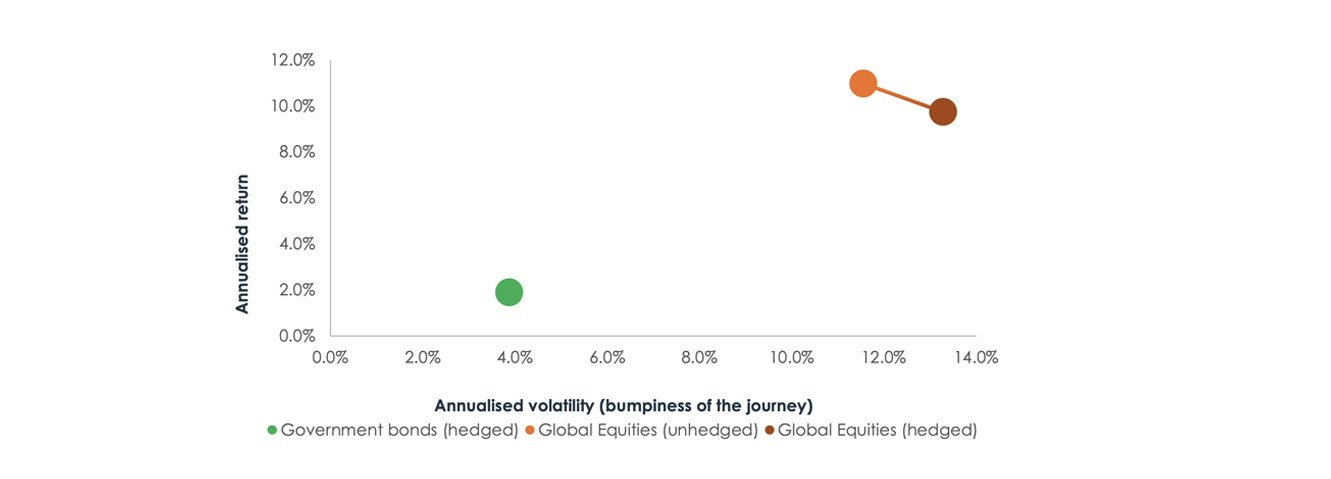
Data source: Payden Global Government Bond Index, iShares MSCI World GBP Hedged ETF, Vanguard Global Stock Index. Period: 01/04/2011 – 31/05/2025. Returns stated in GBP.
There can also be times when holding overseas investments without currency hedging provides some diversification from economic conditions at home. However, the relationship between inflation, currencies and investment markets is not predictable, so this should not be viewed as guaranteed protection.
For growth assets such as equities, the decision is less clear-cut. Research suggests that currency hedging does not consistently reduce overall portfolio risk, meaning some long-term investment approaches retain overseas currency exposure rather than routinely hedging it.
Three things to understand about currency risk
- Currency movements can affect the returns UK investors receive from overseas investments.
- Hedging can help reduce the impact of currency movements, particularly where investments are intended to provide stability, although it brings its own costs and considerations.
- Predicting currency movements consistently is extremely difficult, which is why currency decisions are generally considered as part of a wider, long-term investment approach.
Important notes: This is a purely educational document to discuss some general investment related issues. It does not in any way constitute investment advice or arranging investments. It is for information purposes only; any information contained within them is the opinion of the authors, which can change without notice. Past financial performance is no guarantee of future results.
Products referred to in this document: Where specific products are referred to in this document, it is solely to provide educational insight into the topic being discussed. Any analysis undertaken does not represent due diligence on or recommendation of any product under any circumstances and should not be construed as such.
Latest news and articles
-
 24 September 2026
The balancing act
-
 8 July 2026
Market Concentration: What’s really going on
-
10 June 2026
Currency risk in portfolios